
Secondary School
I attended school during a period in South Africa’s history with the greatest political turmoil, and the purpose of schooling was to “mould the young in such a way that they will achieve self-realization and render service to their fellow-men, country, nation and their God.” This aim was to ensure we developed the ‘South African attitude to life’ to which included retaining the status quo of Apartheid. “The South African attitude to life is characterised, among other things, by striving after the retention of identity, which implies that the South African national groups must, in the first place, retain, preserve and amplify their identities, which means that each South African who considers South Africa as his own country, and trusting in this, wishes to rear his issue, will give expression to separation of national groups in some form or other”.
The following extract from the introduction of a speech by Paddy Kearney at Natal University highlights the purpose of our schooling in South African government schools.
“In this talk, I’m not going to elaborate those aspects of the S.A. school system which you are very familiar with, and which reflect fascist concern with control, e.g. the obsession about length of hair, uniforms, keeping a rigid control of syllabuses, compulsory attendance at or participation in sport, cadets, assemblies of an authoritarian kind, youth preparedness courses, etc., etc. We have all suffered from some or all of these. Nor is there need to say much about the fact that pupils have virtually no say over the control of schools. Even the authority of prefects is an extension of staff authority — a kind of police authority — rather than pupil representation in decision-making.”


I attended Athlone Boys’ High School from 1983 until 1998 after completing my primary school education (1976 – 1982) at Sir Edmund Hillary Primary School.

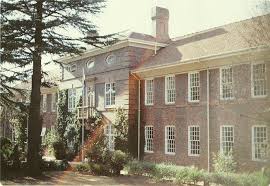
The Historical Context of my School Career (Early 1980s)
The 1976 Soweto Uprising led to some whites calling for reform and an eventual end to apartheid, others believed the government needed to deal with uprisings more strictly and to protect white power even more. After the Soweto Uprising of 1976, the South African government led by P.W. Botha, introduced changes which it claimed were reforms. These, it was hoped, would reduce international criticism of apartheid, satisfy white South Africans, form relations with other black countries in Africa and reduce internal black resistance.
P.W. Botha also realized the strength of united black resistance. The National Party (NP) government had initially used a ‘divide and rule’ approach by dividing the population into ethnic groups and by treating each group differently. A hierarchy of privilege was propagated according to skin colour, with whites, Indians, Coloureds and blacks in descending ranking. Further, black South Africans were divided even more according to language. This division was however failing, and the resistance was becoming more and more united.
The government therefore tried to find new ways of dividing the population. Its strategy was to admit a small and carefully chosen and controlled number of black people into the middle class. The thinking was that, by creating a richer, black middle class, who would support apartheid and the government because they now needed apartheid to keep their elevated positions, black resistance would be reduced.The government also tried to make the gap between Indian and Coloured and African more defined. This was done through the new constitution that the NP government introduced in 1983. The Constitution created a new parliamentary system (called the Tricameral Parliment), which created different houses, or sections, of the government. Under the new constitution, a State President (no longer a Prime Minister, but holding the power of the old President and Prime Minister) led South Africa. The NP also introduced some other reforms to apartheid in the early 1980s.
One of the reasons why the 1980s became so violent and moved South Africa towards change, was because the opposition to apartheid became united and so active during this period. There was mass action from the people, and although they were all part of different civil or community groups, they acted together for the same aim. A very important organization during the 1980s was the United Democratic Front (UDF). The UDF was not so much one organization by itself, but rather a grouping of many different organizations all acting together. The UDF also had close links with the ANC, and many members of the UDF were also either members of the ANC, active in other community groups or they joined the ANC later. The UDF consisted of hundreds of women, student, church, trade union, cultural, sporting and other groups.
specific apartheid laws were relaxed or removed, such as laws regarding separate amenities and even some of them regarding influx control and job reservation. Many people however saw these reforms as merely cosmetic, as although they changed the face of apartheid from the outside, the system did not really change at all, and the situation for the normal man on the street got worse rather than better. The 1980s were also the most violent years of apartheid, as the government tried to hold onto its power and repress the resistance of the black people by any means they could.
The government reacted to the increased unrest and organization in the same way as it always had – through banning people and organizations, through violence and suppression and eventually through s state of emergency. A state of emergency gives the police and state special powers over the people, and people can be arrested without reason, held for long periods of time without trial. During a state of emergency, the state affords itself special powers and bypasses normal laws that protect the human and civil rights.
The government initially introduced a state of emergency in only some areas of the country in 1985, but soon this was extended to the whole country and renewed on an annual basis until 1990.
Under the leadership of President P.W. Botha the ruling National Party steadily tightened the screw on the South Africa press, it was often easier to understand what was happening in the country reports in several foreign countries, than by reading South African papers themselves. This was acheived through the steadily expanding State of Emergency restrictions on the media – restrictions which aimed first at blotting out public awareness of the mass, semi-insurrectionary resistance which characterized South Africa in 1984-85, by banning reports on events.

Athlone Boys’ High first Black student
Athlone Boys’ High was one of the first ‘white’ government schools to enroll a black student. In 1986 when I was in Standard 8 the school enrolled its first Black student in Standard 6. He was the son of the Consulate General of the Transkei, one of the homelands in South Africa. For him to be admitted the teachers, students and parents were required to vote in 1985. His admittance would only be allowed by the Education Department if the majority voted ‘yes’.
